AI & Business Systems
Where Does the Time Saved by AI Actually Go?
AI may help a task move faster. Here's how service-business owners can decide where that time goes and improve the work around it.
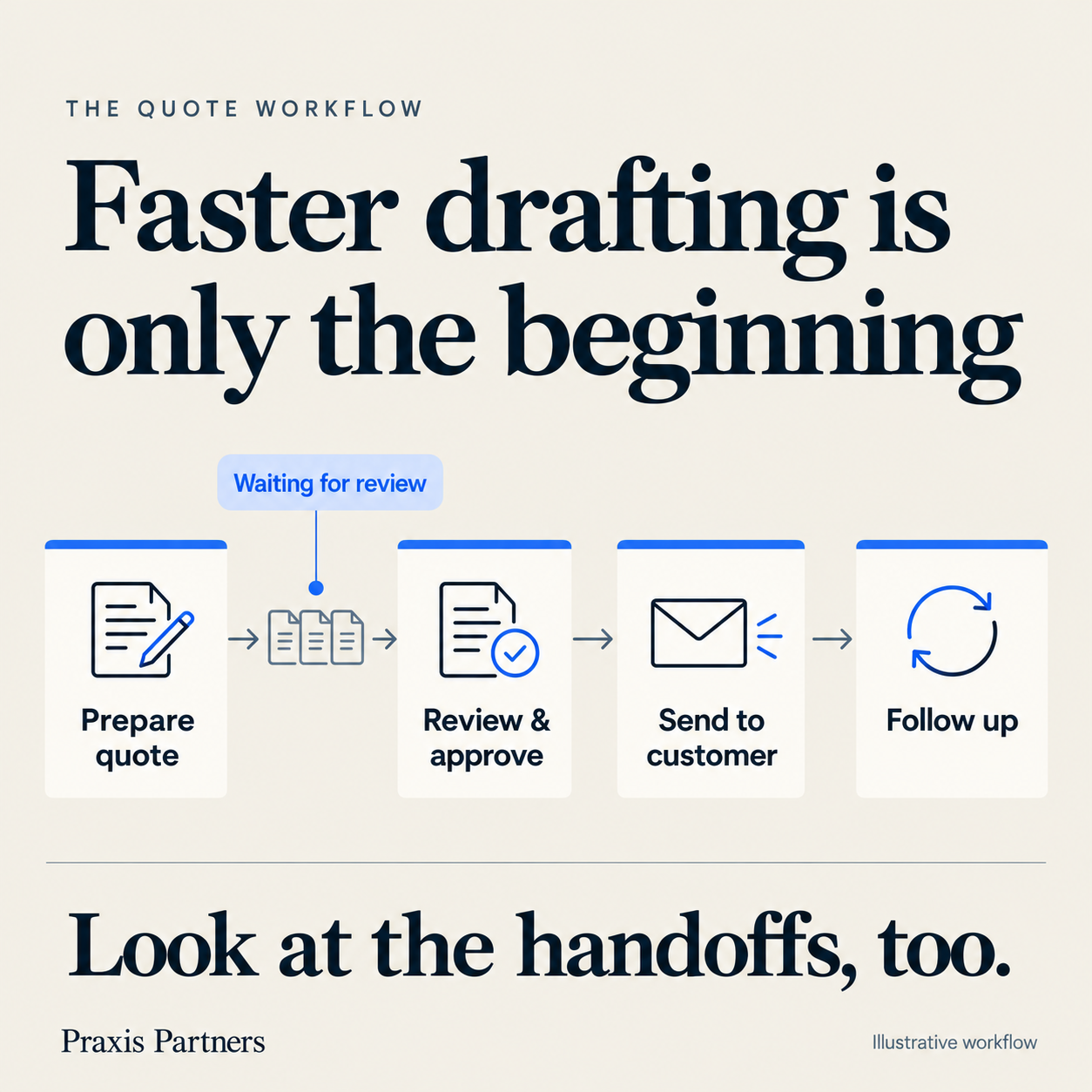
An employee prepares a customer quote faster with AI. That's useful. But the quote still needs the owner's review, the customer needs an answer, and someone needs to follow up.
Where does the saved time actually go?
For a business owner, that's worth deciding before a new tool becomes part of the daily routine. The benefit you want might be room for another job, more attention for customers, or fewer evenings catching up on paperwork. Each requires more than finishing one task quickly.
What the research gives us to think about
Gallup's October 6, 2026 article reports that 63% of employees who had used AI at work said it helped them work faster; 47% reported more time for interesting work and 46% reported better-quality work. The findings are self-reported, based on 7,845 U.S. employees surveyed January 26–March 24. They don't measure savings for a particular small business or prove that AI caused a business outcome.
A practical question to take from those findings is: what would a worthwhile improvement look like in your business?
Follow the work beyond the faster task
Consider this illustrative example, not a Praxis client result.
A service business uses AI to organize job notes into a draft quote. Preparing the draft takes less effort. The owner still reviews every quote, but reviews happen whenever there's a break between site visits and phone calls.
The draft is ready earlier. It may still wait until tomorrow to reach the customer.
Before introducing another tool, trace one quote from the initial request to the customer's decision:
- Is the information needed to prepare it available?
- Who checks the scope, pricing, and promises?
- When does that review happen?
- Who sends the approved quote and owns the follow-up?
- How does everyone know what's still waiting?
The useful change might be a clearer intake checklist, a daily review window, or an assigned follow-up. AI can help prepare information within that process. The team still needs to agree how the work moves forward.
Decide what the recovered time is for
Suppose a change does reduce the effort involved. Agree on how you'd like to use that capacity.
Perhaps an office employee can spend more time answering customer questions. Perhaps the owner can leave on time twice a week. Perhaps the team can handle additional work without dropping existing commitments.
Be specific enough that you can tell whether it's happening. “Make quoting easier” is a starting point. “Reduce the quotes waiting overnight for review” gives you something concrete to investigate.
Talk with the people doing the work, too. Ask which parts are frustrating, where checking an AI draft adds effort, and what would make the change useful to them. Include field staff and anyone receiving the information, even if they never use the AI tool themselves.
Check the whole result
Start with one recurring task and record a simple baseline. Look at preparation time, time spent waiting, corrections, and whether the next step happens when it should.
After trying a change, look at those same measures. Faster drafting is useful, but extra corrections or a longer review queue can absorb that benefit.
Keep the checks appropriate to the work. A quote needs someone accountable for its scope and price. A customer message needs accurate facts and a clear decision about who can send it. Decide what happens when information is missing or the system fails.
Also check the human result: did the team gain useful capacity, or did the owner simply inherit another queue to manage?
Start with the friction you can recognize
You don't need a sweeping AI plan to begin. Choose one piece of work that keeps creating delays, interruptions, or repeated chasing. Walk through a real example with the people involved, then identify the smallest change worth testing.
Praxis Partners helps owner-led service businesses work through these problems in quoting, follow-up, handoffs, and administration. We start by understanding the work, then decide whether process improvements, existing software, automation, or AI fit the need.
If there's a part of your business you keep having to chase, that's a useful place for a conversation. Learn about Praxis Partners.
Where is your business getting stuck?
The Opportunity Assessment helps identify the bottlenecks, weigh the options, and decide what is worth improving first.
Explore the assessment